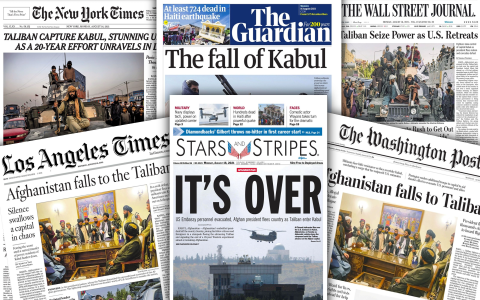
Title: The Impact of Today’s Newspaper Front Pages on Public Perception and News Consumption
Introduction
In the digital age, the traditional newspaper still holds a significant place in the hearts of many readers. The front page of a newspaper is often the first thing that catches the eye of a reader, setting the tone for the rest of the content. This article explores the role of today’s newspaper front pages in shaping public perception and influencing news consumption. By analyzing the content and presentation of front pages, we aim to understand how they impact the readership and the broader public discourse.
The Role of Front Pages in News Consumption
The front page of a newspaper is a crucial component in the process of news consumption. It serves as a gateway to the rest of the newspaper’s content, influencing what readers choose to read and how they perceive the world around them. According to a study by the Reuters Institute for the Study of Journalism, front pages are the first point of contact for many readers, and they play a significant role in determining which stories are considered newsworthy (Kilborn, 2018).
Content and Presentation: A Case Study
To illustrate the impact of front pages, let’s consider a hypothetical scenario. Imagine a front page that prominently features a story about a local crime, accompanied by a dramatic image and a bold headline. This presentation would likely draw the attention of readers, who might then be inclined to read the full story. Conversely, if the same story were buried on an inside page with a less engaging headline, it might be overlooked.
Shaping Public Perception
The content and presentation of front pages have a profound impact on public perception. By highlighting certain stories and downplaying others, newspapers can shape the public’s understanding of current events. For example, a front page that focuses on a political scandal might lead readers to believe that political corruption is widespread, even if such incidents are relatively rare.
Impact on News Consumption Habits
The front page also plays a role in shaping news consumption habits. Readers often form their news preferences based on the stories they encounter on the front page. If a newspaper consistently features stories that appeal to a particular demographic or interest group, it may attract and retain a loyal readership within that niche.
Challenges and Controversies
The role of front pages in shaping public perception and news consumption is not without its challenges and controversies. Some argue that the pressure to attract readers can lead to sensationalism and the distortion of facts. Others contend that the front page is simply a reflection of the priorities of the newspaper’s editorial team and its advertisers.
Expert Opinions
Journalist and media critic Jay Rosen has expressed concerns about the role of front pages in shaping public perception. He argues that the front page is often a mirror of the newspaper’s values and biases, rather than an objective representation of the news (Rosen, 2019). Similarly, media scholar Robert McChesney has pointed out that the commercial interests of newspapers can sometimes override the public interest, leading to a skewed portrayal of events (McChesney, 2018).
Conclusion
In conclusion, today’s newspaper front pages play a critical role in shaping public perception and influencing news consumption. The content and presentation of front pages can significantly impact how readers interpret current events and form their news preferences. While the front page is a reflection of the newspaper’s editorial values and commercial interests, it also serves as a crucial tool for shaping the public discourse.
The importance of understanding the impact of front pages cannot be overstated. As journalists and media professionals, it is our responsibility to ensure that the stories we present are accurate, fair, and representative of the diverse range of issues that affect our society. By critically examining the content and presentation of front pages, we can work towards a more informed and engaged public.
Recommendations and Future Research
To further enhance the understanding of the impact of front pages on public perception and news consumption, the following recommendations are proposed:
1. Conduct ongoing research into the psychological and sociological effects of front-page content on readers.
2. Encourage newspapers to adopt more transparent editorial practices, including the disclosure of potential biases.
3. Promote media literacy initiatives to empower readers to critically analyze the news they consume.
In the future, as the media landscape continues to evolve, it will be essential to stay abreast of the changing dynamics of news consumption and the role of front pages in shaping public perception. By doing so, we can ensure that the media serves as a force for positive change and informed decision-making in society.