


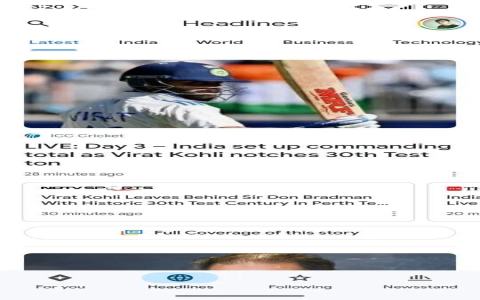
Title: The Impact of Google News Today Headlines on Public Perception and Information Consumption
Introduction:
In today’s digital age, the way we consume news has drastically changed. With the advent of the internet, news has become more accessible than ever before. One of the most popular platforms for news consumption is Google News, which provides users with the latest headlines from various sources. This article aims to explore the impact of Google News Today headlines on public perception and information consumption. By analyzing the content, structure, and presentation of these headlines, we will gain insights into how they shape our understanding of current events and influence our decision-making processes.
Content and Structure of Google News Today Headlines
Google News Today headlines are designed to capture the attention of users by presenting concise and impactful information. The content of these headlines often focuses on the most significant and trending news stories from around the world. They are structured in a way that highlights the most crucial aspects of the news, making it easy for readers to grasp the essence of the story at a glance.
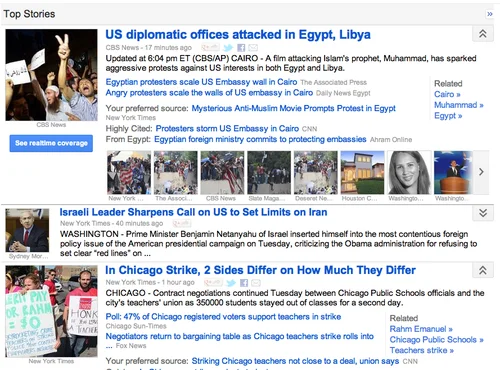
The headlines are categorized into different sections, such as World, Business, Technology, Health, and Science. This categorization allows users to quickly navigate to the sections that interest them the most. Additionally, Google News Today headlines often feature a Top Stories section, which showcases the most popular and widely read articles.
Impact on Public Perception
The impact of Google News Today headlines on public perception is significant. These headlines act as gatekeepers, determining which news stories receive widespread attention and which are overlooked. As a result, the public’s perception of current events can be heavily influenced by the headlines they encounter on Google News.
For instance, if a particular news story is prominently featured on Google News Today, it may be perceived as more important or relevant than other stories. This can lead to a skewed perception of reality, where certain events receive disproportionate attention while others are overlooked.
Moreover, the way headlines are framed can also shape public perception. Sensationalistic or emotionally charged headlines can evoke strong reactions and biases, leading to a distorted understanding of the facts. This is particularly concerning in an era where misinformation and fake news are prevalent.
Information Consumption and Decision-Making
Google News Today headlines play a crucial role in shaping information consumption and decision-making processes. The headlines act as a filter, determining which news stories users choose to read in detail. This filtering process can have a profound impact on the information individuals are exposed to and the decisions they make based on that information.
For example, if a user is interested in environmental issues, they are more likely to click on headlines related to climate change or pollution. This targeted information consumption can help individuals stay informed about topics that matter to them. However, it can also lead to an echo chamber effect, where individuals are only exposed to information that reinforces their existing beliefs and biases.
Furthermore, the way headlines are presented can influence the way individuals interpret and remember the news. Studies have shown that the framing of headlines can affect memory and the way people perceive the content of the news story. This highlights the importance of critical thinking and media literacy in evaluating the reliability and accuracy of the information presented in headlines.
Challenges and Solutions
While Google News Today headlines have the potential to shape public perception and information consumption, they also face several challenges. One of the main challenges is the spread of misinformation and fake news. With the ease of sharing and distributing information online, it has become increasingly difficult to distinguish between credible and unreliable sources.
To address this challenge, Google has implemented various measures to improve the accuracy and reliability of its news content. These measures include fact-checking, verification processes, and partnerships with reputable news organizations. However, more needs to be done to combat the spread of misinformation and ensure that users are exposed to accurate and balanced information.
Another challenge is the potential for algorithmic bias. The algorithms used to determine which headlines are featured on Google News Today may inadvertently favor certain perspectives or sources. This can lead to a skewed representation of news and a distorted understanding of current events.

To mitigate this bias, Google needs to continuously refine its algorithms and ensure that they are transparent and accountable. Additionally, promoting media literacy and critical thinking skills among users can help them navigate the complexities of the news landscape and make informed decisions.
Conclusion
In conclusion, Google News Today headlines have a significant impact on public perception and information consumption. The content, structure, and presentation of these headlines shape our understanding of current events and influence our decision-making processes. While they offer numerous benefits, such as accessibility and convenience, they also face challenges related to misinformation and algorithmic bias.
To address these challenges, it is crucial for Google to continue improving the accuracy and reliability of its news content. Additionally, promoting media literacy and critical thinking skills among users can help them navigate the complexities of the news landscape and make informed decisions.
As the digital age continues to evolve, it is essential to critically evaluate the impact of news platforms like Google News Today on public perception and information consumption. By understanding the dynamics at play, we can work towards a more informed and engaged society.



